Avery Flores · 3 October 2026
Shifting Content Balance During Platform Transitions: Tracking Linguistic Patterns with Specialized Monitoring Tools
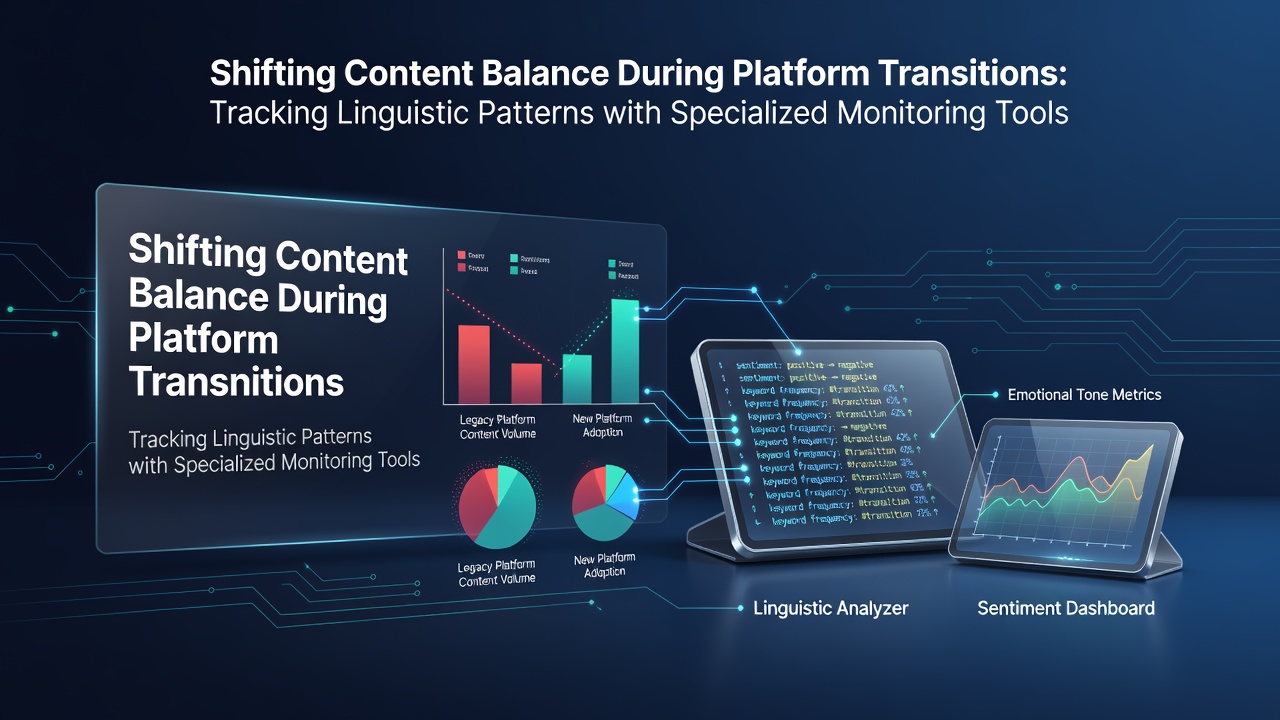
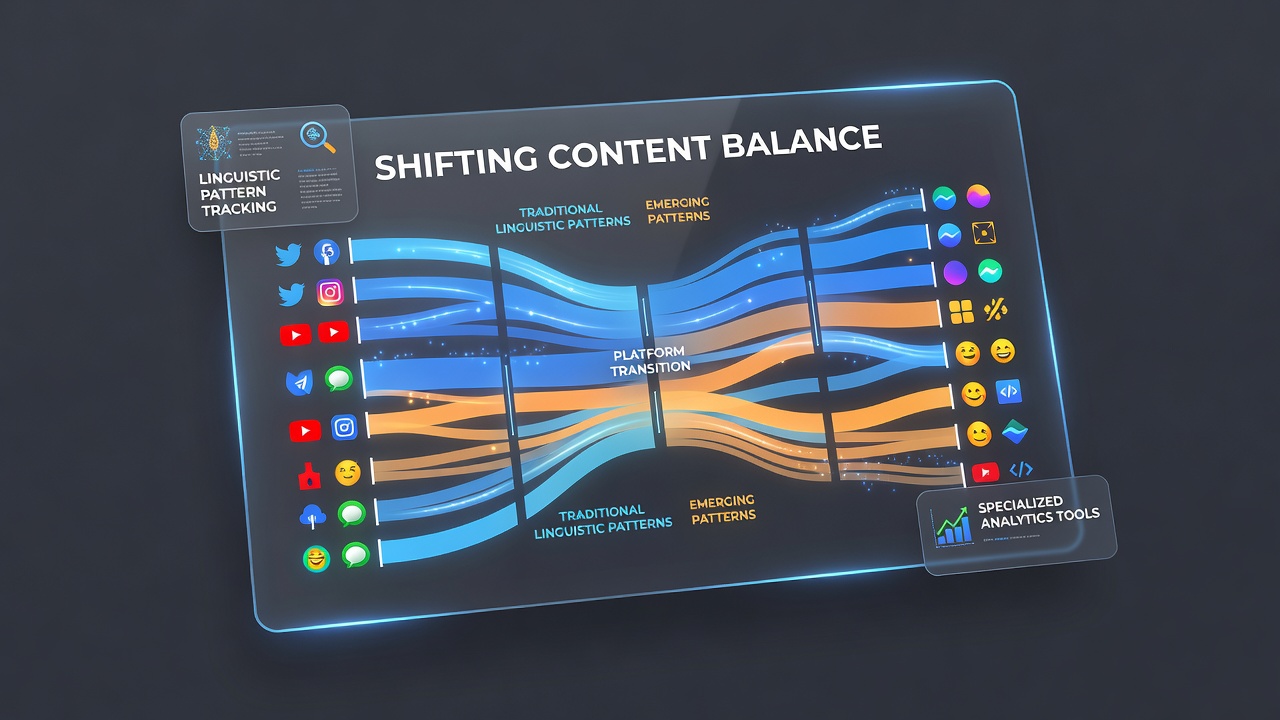
Platform transitions create measurable changes in how language appears across digital environments, and specialized monitoring tools capture those shifts through systematic analysis of word frequency, sentence structure, and thematic emphasis. Organizations that move content between content management systems or social platforms often see vocabulary sets expand or contract while sentence lengths adjust to meet new algorithmic preferences. Data from multiple migration projects shows these alterations occur within the first 30 to 60 days after the switch, after which patterns stabilize unless further updates intervene.
Platform Transitions and Content Redistribution
Transitions typically unfold in phases that include inventory assessment, mapping of existing assets, and post-launch optimization. During the mapping stage linguistic elements receive new metadata tags that influence how search systems interpret them, and this re-tagging process alters the balance between technical terms and narrative descriptions. Observers note that platforms with stricter character limits compress descriptive passages, whereas systems allowing longer formats encourage elaboration and subordinate clauses. Researchers at several academic institutions have documented these effects by comparing pre- and post-migration corpora from the same organizations.
Methods for Tracking Linguistic Patterns
Specialized tools combine natural language processing libraries with time-series databases to record changes in lexical diversity and syntactic complexity. These platforms ingest archived versions of pages alongside live crawls, then compute metrics such as type-token ratio and average dependency length. When thresholds are crossed, alerts notify teams that certain linguistic features have drifted beyond expected ranges. One study released by a European research consortium in 2025 illustrated how these alerts helped teams restore balance within two weeks rather than allowing imbalances to persist for months.
Key Metrics and Their Interpretation
Analysts track several indicators simultaneously because isolated metrics can mislead. Lexical density reveals whether content has grown more repetitive, while readability scores indicate shifts toward simpler or more complex phrasing. Thematic clustering algorithms identify whether previously prominent topics have receded or new ones have emerged. Figures from industry reports show that organizations monitoring at least four complementary metrics detect meaningful changes earlier than those relying on single scores. And because transitions often coincide with redesigns, teams must separate design-driven language adjustments from platform-driven ones through controlled comparisons.
Integration with Existing Analytics Workflows
Monitoring tools integrate with web analytics platforms by exporting structured data that can be joined with traffic and engagement figures. This joined dataset lets teams examine whether linguistic adjustments correlate with changes in user behavior. For example, an increase in passive constructions coincided with longer average session durations on one news platform after migration, according to internal logs shared in a 2024 conference paper. Teams that embed linguistic monitoring into daily reporting cycles gain visibility into content performance that standard traffic dashboards alone cannot provide.
Developments Observed in October 2026
By October 2026 several vendors had released updated versions of their monitoring suites that incorporate transformer-based models trained on multilingual corpora. These models improve detection of subtle register shifts across languages and reduce false positives when platforms update their rendering engines. Government agencies in Canada and Australia have begun publishing guidance documents that recommend linguistic monitoring as part of broader digital transition checklists, and these documents reference case studies from both public-sector websites and commercial publishers.
Case Examples from Recent Migrations
One research institution migrated its publication archive to a new repository system and used pattern-tracking software to confirm that abstract length remained consistent while citation density increased slightly. Another organization moving customer-support content between two help-desk platforms observed a measurable rise in imperative sentences after the transition and adjusted templates to restore a mix of instructional and explanatory language. Such examples appear in conference proceedings and technical reports rather than marketing materials, which helps establish baseline expectations for similar projects.
Conclusion
Platform transitions inevitably reshape linguistic patterns, yet specialized monitoring tools supply the data needed to measure and respond to those changes. By combining established NLP techniques with longitudinal tracking, teams obtain objective records of how vocabulary, syntax, and thematic emphasis evolve. Continued refinement of these tools through October 2026 and beyond supports more precise management of content balance across successive platform environments.