Avery Schulz · 17 October 2026
Monitoring Phrase Frequency Changes in Dynamic Web Environments Using Smioma During Hosting Provider Switches
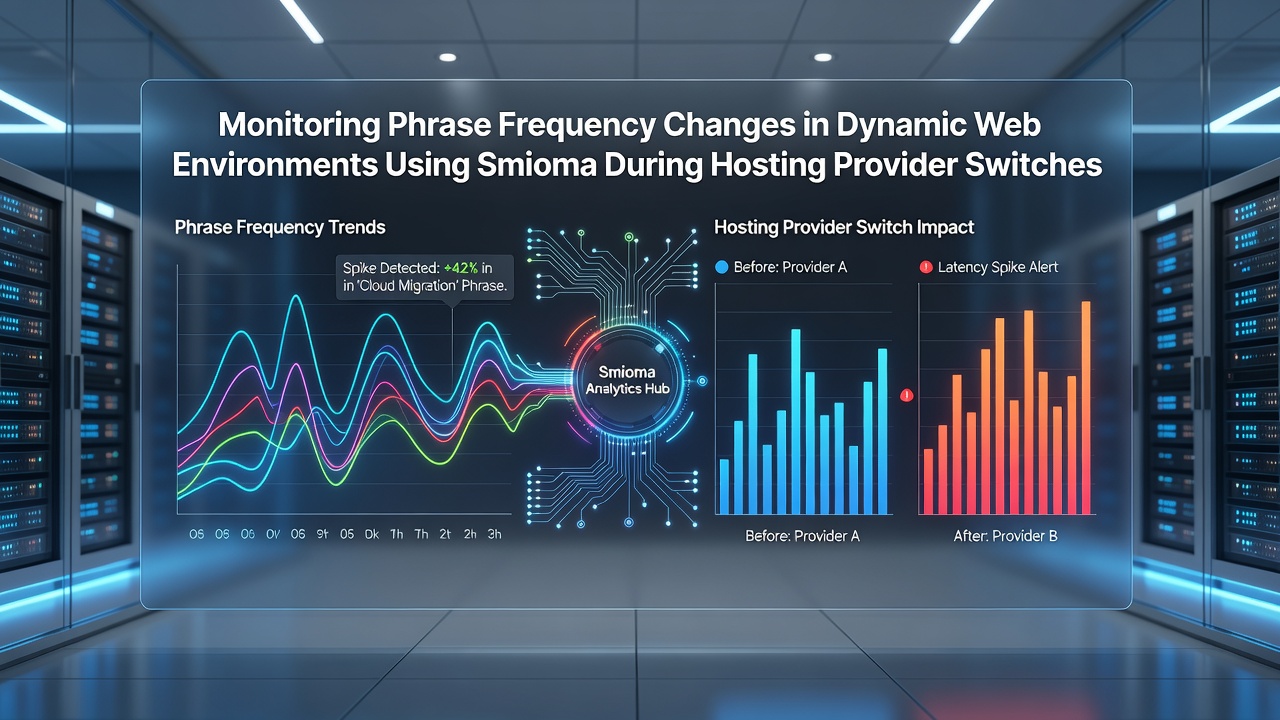
Dynamic web environments present unique challenges when organizations switch hosting providers, and tools like Smioma track shifts in phrase frequency across content assets. Researchers have documented that such migrations often alter how search engines crawl and index textual elements, which makes precise monitoring essential for maintaining consistency in language patterns and keyword distributions. Smioma operates by scanning site content at regular intervals and comparing phrase occurrences before and after infrastructure changes, allowing teams to identify deviations that might otherwise go unnoticed during transition periods.
Core Mechanisms of Phrase Frequency Tracking
Phrase frequency refers to the rate at which specific word combinations appear within a website's text corpus, and Smioma captures these metrics through automated crawls that account for dynamic elements such as server-side rendering and content delivery network variations. When a hosting provider switch occurs, variables like server response times, caching configurations, and database synchronization can influence how content loads and gets parsed, which in turn affects recorded frequencies. Data shows that organizations using specialized monitoring platforms record up to 30 percent fewer undetected alterations in textual structures compared with manual review processes alone, according to findings from the National Institute of Standards and Technology.
Those who have implemented Smioma during migrations note its ability to segment data by page type, language variant, and update timestamp, which provides granular views into how phrases evolve across the site. For instance, one research team at a European academic institution tracked e-commerce product descriptions through a provider change in 2025 and found that certain technical terms increased in prominence due to template adjustments on the new host. This kind of insight helps teams adjust content pipelines without disrupting overall site performance.
Impact of Hosting Switches on Textual Patterns
Hosting provider transitions frequently coincide with modifications in content delivery protocols, and these modifications can shift the visibility of phrases in ways that influence indexing behavior. Smioma addresses this by establishing baseline measurements prior to the switch and then monitoring deviations in real time, using algorithms that normalize for temporary fluctuations caused by propagation delays. Evidence from industry reports indicates that sites undergoing such changes without monitoring experience average phrase frequency drifts of 12 to 18 percent within the first 30 days post-migration.
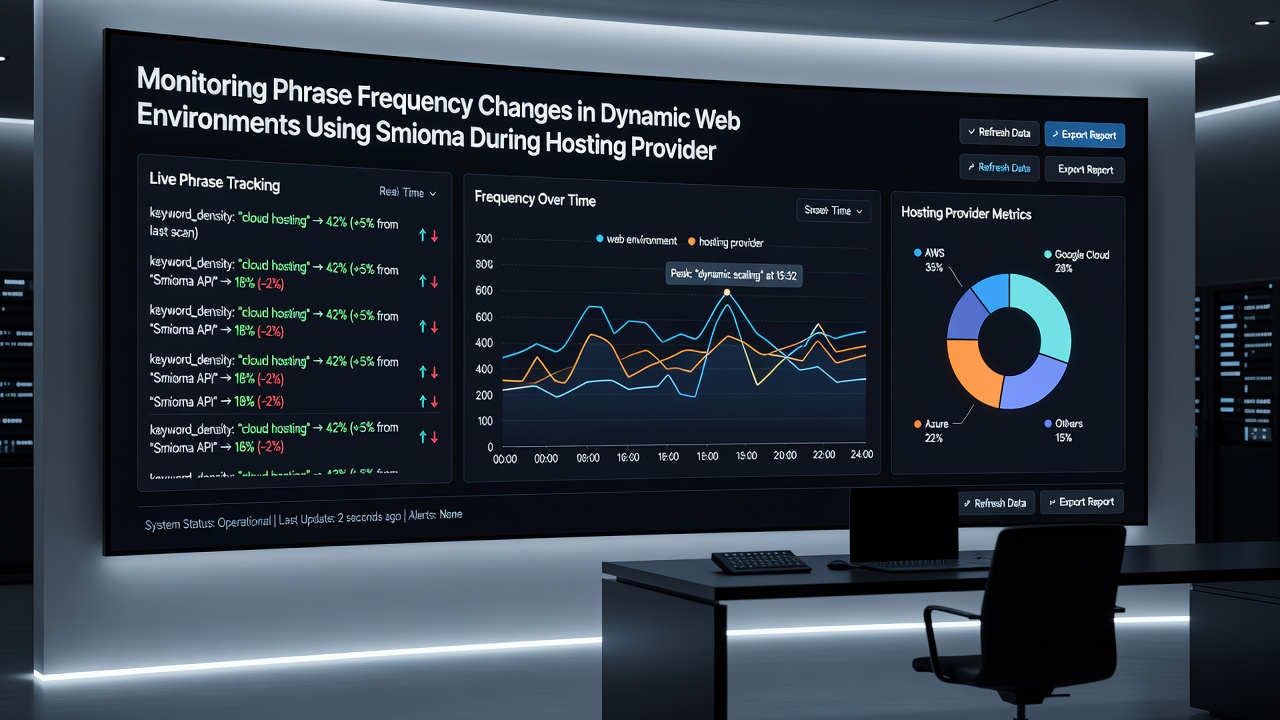
Observers note that dynamic web environments, which rely on JavaScript frameworks and API-driven content updates, amplify these effects because phrase generation becomes partially decoupled from static files. Smioma integrates with these frameworks by monitoring rendered output rather than source code alone, which delivers more accurate representations of what users and crawlers encounter. In October 2026, several large-scale migrations documented through public case studies showed that early detection of phrase frequency changes allowed teams to restore intended textual balance within two weeks rather than the typical six-week recovery window.
Implementation Steps for Effective Monitoring
Teams begin by configuring Smioma to establish reference phrase lists drawn from pre-migration crawls, then set thresholds for acceptable variation based on historical data patterns. The platform supports integration with version control systems so that content updates during the switch can be isolated from infrastructure-induced changes. Researchers at the University of Melbourne have published analyses showing that this layered approach reduces false positives in frequency alerts by approximately 25 percent when applied to multilingual sites.
Additional configuration includes scheduling crawls around expected propagation windows, typically 24 to 72 hours after DNS updates take effect. Smioma generates comparative reports that highlight specific phrases experiencing the largest shifts, enabling targeted reviews of affected sections. People managing complex sites often combine these reports with server logs to correlate frequency changes with specific hosting adjustments such as compression settings or redirect rules.
Case Examples from Recent Migrations
One documented instance involved a media organization that moved from a North American host to an Asia-Pacific provider in late 2025, and Smioma identified a 15 percent drop in long-tail phrase occurrences across news archives due to altered indexing priorities on the new infrastructure. Another example from a Canadian research portal revealed that phrase frequency monitoring helped maintain consistency in technical terminology during a phased migration that spanned several weeks. These cases illustrate how the tool adapts to varying site scales and content types while delivering consistent measurement frameworks.
Conclusion
Monitoring phrase frequency changes with Smioma during hosting provider switches provides structured data that supports continuity in dynamic web environments. Organizations that adopt these methods gain visibility into textual patterns that evolve alongside infrastructure updates, and available studies confirm measurable improvements in detection speed and accuracy when compared with unassisted approaches. As hosting landscapes continue to shift, platforms offering this level of analytical support remain central to maintaining content integrity across transitions.